

🎨 Why Your Child Doesn’t Need to Be ‘Good’ at Art to Benefit From It
At some point, every child says:
“I’m not good at drawing.”
And every parent worries:
“Should I push them to improve… or let it go?”
Here’s the truth:
They don’t need to be “good” at it.
In fact, they never did.
Because the value of art lies not in how it looks —
But in how it feels, what it builds, and what it unlocks.
🧠 Art Is About Growth, Not Grades
In a world obsessed with results — marks, medals, rankings — art gives children something rare:
🖌 Freedom from judgment
🎨 Freedom to experiment
✂️ Freedom to fail without fear
That’s where real learning happens.
Even when the lines are uneven and the colors clash, the brain is:
-
Solving problems
-
Exploring textures
-
Strengthening focus and patience
-
Processing thoughts without pressure
No gold star needed.
🧩 The Science: Process Over Perfection
Research in child development shows that when kids engage in open-ended art (meaning no “right” answer), they activate parts of the brain responsible for:
-
Executive functioning
-
Emotional regulation
-
Motor skill coordination
-
Creativity and imagination
And this happens regardless of their skill level.
Messy scribbles? Brain exercise.
Asymmetrical paper fold? Finger strength.
Colors outside the lines? Emotional freedom.
🌱 When “Bad Art” Builds Great Confidence
Kids often feel more confident when they’re in control — not when they’re being corrected.
Art gives them a safe place to:
-
Make decisions
-
Take risks
-
Trust their own ideas
-
See effort pay off — not just skill
Over time, this builds creative resilience — the confidence to try, tweak, and try again.
Which, let’s be honest, is a superpower in life.
💬 What to Say Instead of “Good Job!”
We often mean well when we say:
“Wow, that’s beautiful!”
But praise focused only on appearance can make kids feel pressured.
Try these instead:
-
“I love how you filled the space with colors!”
-
“That’s such a creative idea — tell me more about it.”
-
“What part did you enjoy the most while making this?”
These responses shift the focus to process, joy, and effort — not perfection.
👩🎨 Even Adults Struggle With “Not Being Good”
This fear of “not being artistic” doesn’t start in adulthood — it starts when we begin comparing.
Let’s protect our kids from that early.
Let their art be art.
Let their hands get messy.
Let their joy lead the way.
Because every moment they spend creating is a moment they spend growing — not proving.
✨ Final Thought: Art Is a Playground, Not a Performance
Your child’s creative journey doesn’t need to be polished or framed.
It just needs to be theirs.
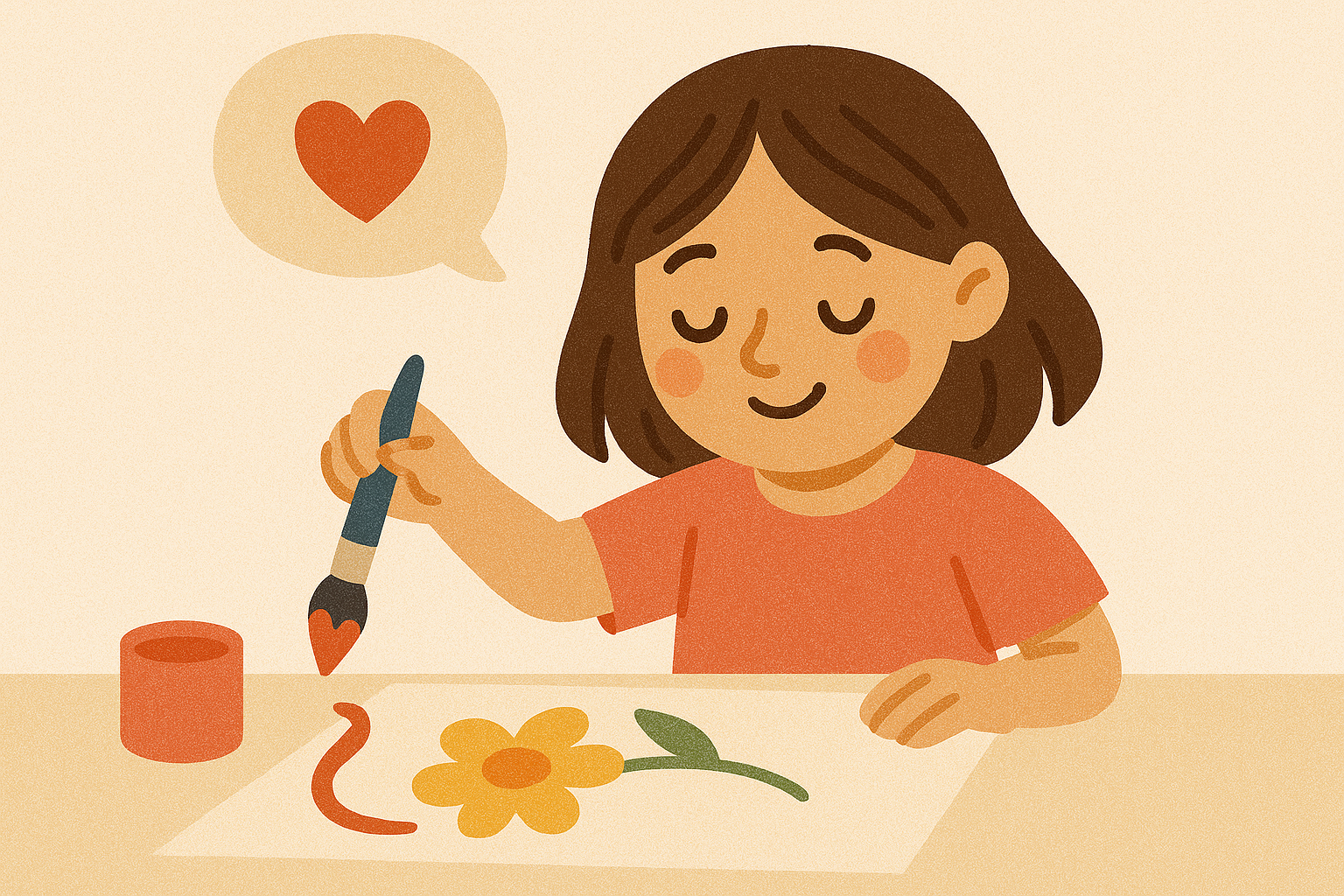
So whether it’s a shaky rainbow, a crooked heart, or a wild mix of glitter and glue — smile, cheer them on, and know this:
They’re already winning.