

🎨 When Kids Create, They Communicate: The Hidden Language of Art
Ever looked at your child’s drawing and wondered,
“Why did they color the sky purple?”
Or, “Why do they keep drawing the same shapes or characters?”
The answer may be deeper than you think.
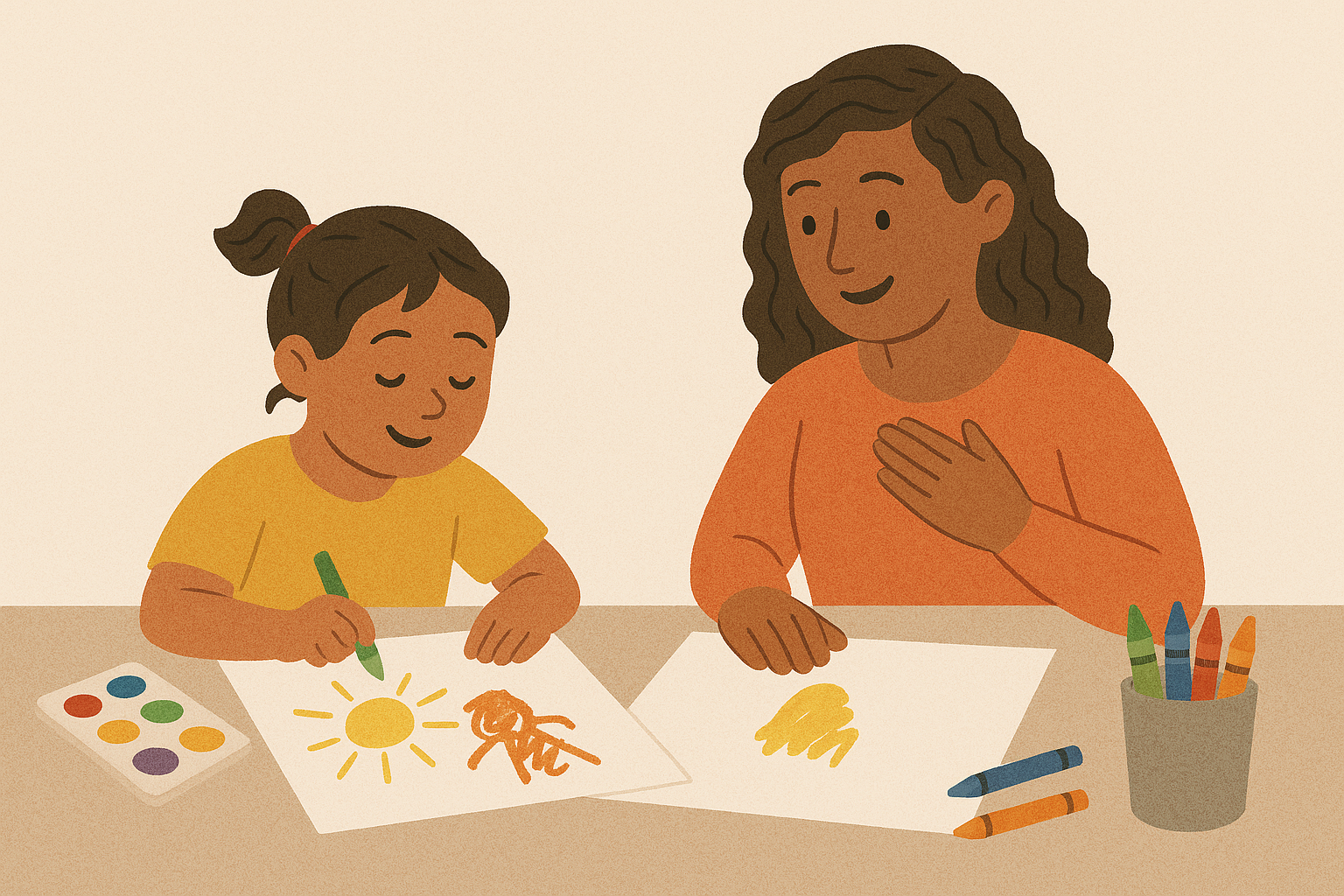
Before children learn to express themselves clearly in words, they speak through images, shapes, and colors.
Art is their first language of emotion.
And the more we listen, the more we understand what’s going on inside their growing minds.
🧠 Why Art Speaks Louder Than Words for Kids
Children don’t always have the vocabulary to explain:
-
That they’re nervous at school
-
That they miss someone
-
That they had a dream they can’t shake
-
Or even that they feel proud of something small
But give them paper, colors, and time — and they’ll often tell you anyway.
A study from the American Art Therapy Association shows that drawing helps children process thoughts and feelings when language falls short.
Art provides:
-
A safe outlet for emotional release
-
A bridge between internal feelings and external expression
-
A tool for storytelling, even before reading/writing skills develop
🖍 How to Decode the Hidden Language of Your Child’s Art
You don’t need a psychology degree to start seeing the patterns in your child’s creations.
Here are a few things to gently notice:
| What They Draw | What It May Show |
|---|---|
| Repeated characters or themes | Something emotionally significant is happening (real or imaginary) |
| Very small or very large figures | Feelings of being overwhelmed or in control |
| Use of strong or dark colors | High emotions (could be excitement or frustration) |
| Absence of people or faces | Difficulty with social dynamics or expressing self |
⚠️ Note: This is not about over-analyzing every line.
It’s about noticing patterns over time — and using them to open supportive conversations.
💬 “Tell Me About This” — A Powerful Parenting Prompt
When your child shows you their creation, resist the urge to say just:
“Wow! That’s pretty!”
Instead, try:
“This is interesting — tell me what’s happening here.”
“I’d love to know the story behind this color/shape/person.”
This encourages them to reflect, connect, and share.
It also shows that you value their imagination — not just the “result.”
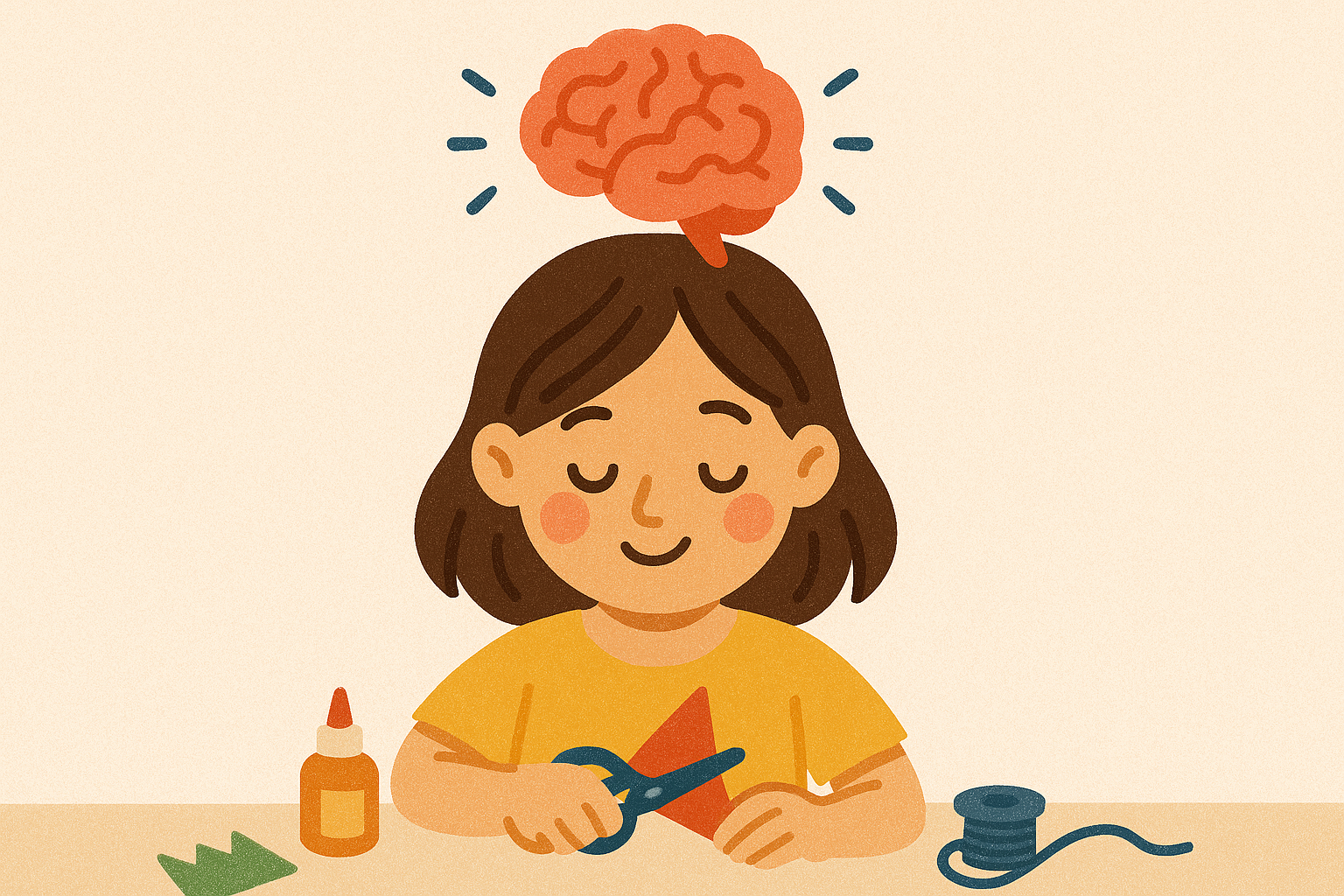
🧩 Art Builds Emotional Intelligence
When kids use art to share what they feel, they start to:
-
Name emotions
-
Build empathy
-
Understand others
-
Solve social problems creatively
These aren’t just artistic benefits — they’re lifelong skills that build better communication, relationships, and confidence.
✨ Final Thought: Look Beyond the Lines
What looks like a swirl of paint or a scribble of crayons might actually be:
-
A way to process the day
-
A secret wish or worry
-
A message they haven’t yet found words for
So the next time your child sits down to create, remember:
You’re not just witnessing a moment of play —
You’re being invited into their inner world.
And that’s a language worth learning.