

🧠 The Science Behind Crafting: What Neuroscience Says About Kids and Creativity
We often see crafting as “just for fun.”
Scissors, glue, colors, paper scraps on the floor — a happy mess that keeps children busy.
But there’s far more happening behind those tiny hands.
Neuroscience tells us that when a child crafts, their brain lights up like a switchboard.
Let’s dive into what science says — and why crafting is one of the most powerful activities for a developing mind.
🧩 Crafting = Full-Brain Activation
Crafting activates both hemispheres of the brain — logical and creative. Here's how:
| Brain Region | Role in Crafting |
|---|---|
| 🧠 Prefrontal Cortex | Planning and decision-making ("What should I make?") |
| 🧠 Motor Cortex | Fine motor skills (cutting, folding, coloring) |
| 🧠 Hippocampus | Memory formation (recalling shapes, colors, techniques) |
| 🧠 Amygdala | Emotional processing (joy, frustration, pride) |
| 🧠 Visual Cortex | Spatial awareness and visual creativity |
Every stroke, every fold, every cut = brain exercise.
🧠 Creativity & Problem Solving Are Linked
When a child asks:
"What can I do with this shape?" or
"How do I make this stand up?"
They’re not just being imaginative — they’re solving problems.
According to studies in child psychology, creative play boosts executive functions — the mental skills that include:
-
Flexible thinking
-
Working memory
-
Self-control
-
Planning and organizing
These are the same skills they’ll use in math, science, communication, and real-life decision-making.
✨ Dopamine: The Brain’s "Reward Juice"
Here’s the magic part:
Every time a child finishes a craft or solves a creative problem, their brain releases dopamine — the chemical linked to motivation and pleasure.
This builds a loop:
Try → Create → Complete → Feel Good → Repeat
It’s the foundation of a growth mindset.
It teaches them that effort leads to joy, and that’s a life-long lesson.
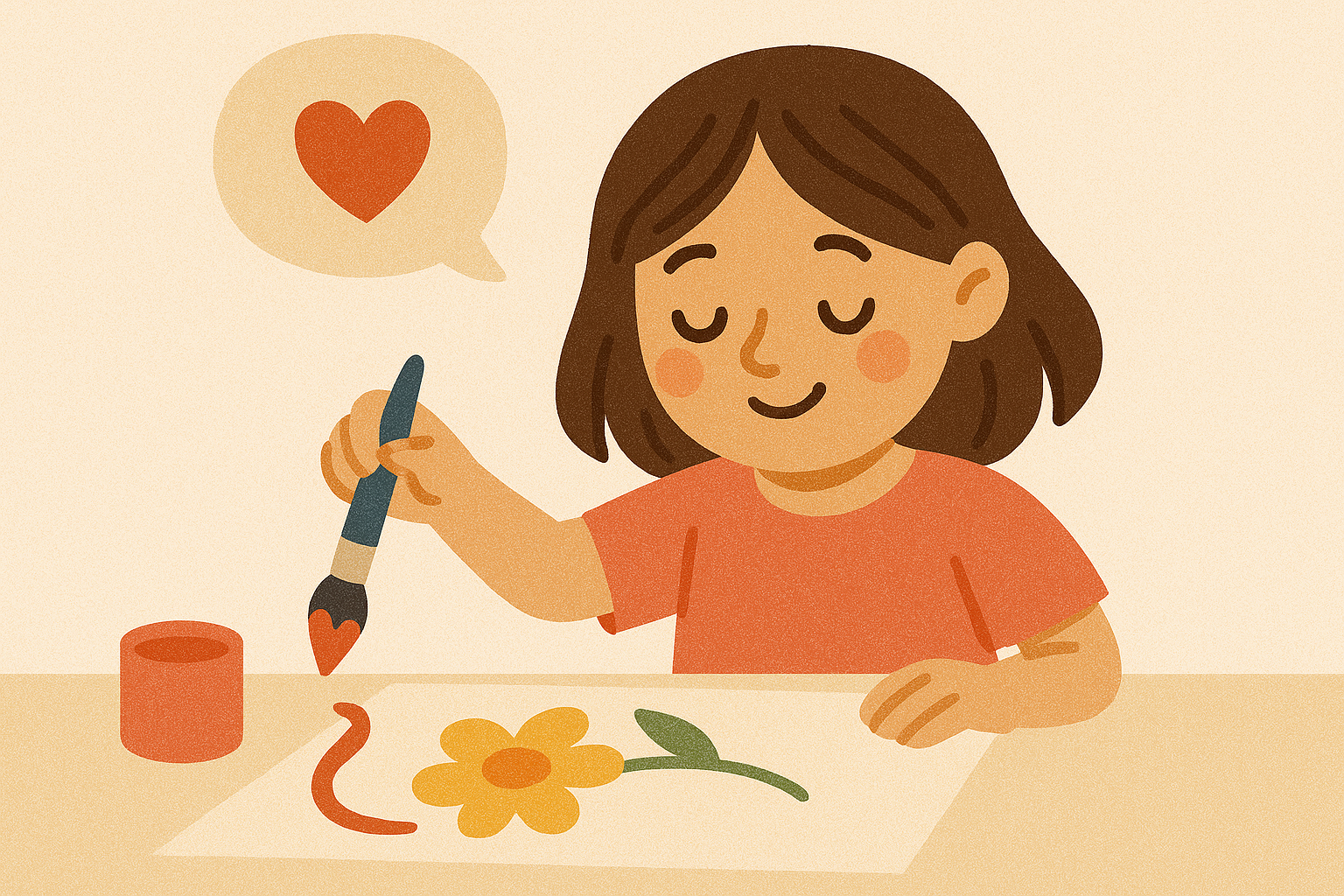
🎨 Emotional Intelligence in Every Brushstroke
Crafting also gives kids a safe space to express:
-
Emotions they don’t have words for
-
Stories they imagine
-
Moments they’ve experienced
According to neuroscience, art is closely tied to emotional regulation.
When kids craft, they often feel calmer, more focused, and more connected — even if they can’t say why.
That’s the power of hands-on emotional expression.
💡 So… What Does All This Mean for Parents?
Here’s the takeaway — every time you give your child time, space, and tools to create, you’re helping them:
-
Build better brain connections
-
Improve focus and decision-making
-
Regulate emotions
-
Boost confidence and motivation
-
Strengthen memory and motor skills
It’s not just crafts.
It’s wiring their brain for life.
🌱 Final Thought: Smart Kids Don’t Just Study — They Create
In a world that’s rushing toward screens and speed, crafting reminds us to slow down and make something.
And science says:
That’s exactly what young brains need.
So next time you lay out colored paper, scissors, and glue — remember:
You’re not just making art.
You’re making neurons connect, ideas form, and confidence grow.